


Please Leave Us A Message
Privacy statement: Your privacy is very important to Us. Our company promises not to disclose your personal information to any external company with out your explicit permission.


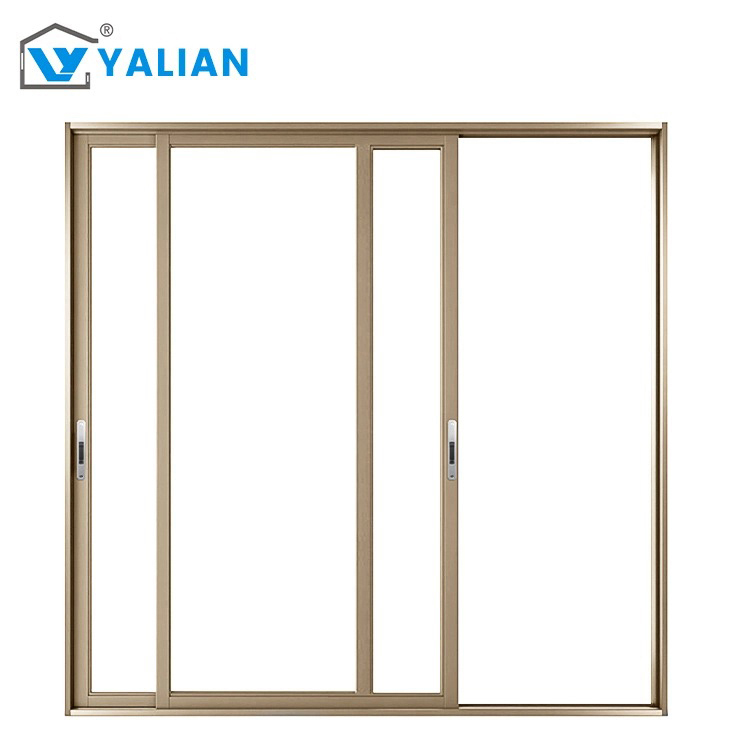
A sliding door system is an architectural entryway solution designed to operate horizontally along a track rather than swinging outward or inward on hinges. This space-saving mechanism allows for seamless transitions between indoor and outdoor environments, maximizing usable floor area in both residential and commercial properties.
Unlike traditional hinged doors, modern sliding doors utilize high-grade aluminum profiles and precision-engineered rollers to ensure smooth, quiet operation even in large-format configurations. For procurement professionals, choosing the right aluminum sliding door systems means balancing aesthetic appeal with structural integrity, thermal performance, and long-term maintenance requirements.
Foshan Yalian Door and Window System Technology Co., Ltd. specializes in manufacturing these advanced systems, integrating design, production, and sales services to meet international quality standards. Our expertise ensures that every component—from the extruded profiles to the deep-processing hardware—works cohesively to deliver reliable performance across diverse climates and usage scenarios.
With over three decades of experience since our founding in 1993, Foshan Yalian has evolved into a comprehensive aluminum door and window enterprise. Our 100,000-square-meter facility in Shishan Town, Nanhai District, houses state-of-the-art extrusion lines ranging from 600 to 2,500 tons, ensuring consistent quality and scalability for bulk orders.
Our integrated approach covers everything from raw material extrusion to deep processing, including two anodizing lines, two electrophoretic coating lines, and specialized color powder spraying capabilities. This vertical integration reduces lead times, lowers costs, and gives you greater control over customization requests—all critical factors for B2B buyers sourcing high-performance sliding door systems.
Every aluminum sliding door produced by Yalian undergoes rigorous quality assurance protocols aligned with international standards. Our manufacturing process leverages internationally advanced technology and a high degree of automation to minimize variability and ensure batch-to-batch consistency.
Using extrusion presses from 600 to 2,500 tons, we produce profiles with tight tolerances that ensure smooth sliding operation and long-term durability.
Multiple finishing options—including anodizing, electrophoresis, color powder spraying, simulated wood grain, and threading—provide superior corrosion resistance and aesthetic flexibility.
Our dedicated glue injection production line enhances thermal and acoustic insulation, meeting energy-efficiency requirements in demanding markets.
In-house cutting, drilling, and assembly equipment allow us to fulfill custom specifications without outsourcing, reducing defects and accelerating delivery.
Selecting a reliable supplier for wholesale sliding door systems requires evaluating more than just price. Procurement decision-makers should consider the following critical dimensions:
Verify that your supplier operates a facility capable of handling your order volume. A factory with 100,000+ square meters and 50,000-ton annual capacity—like Yalian's—ensures you won't face bottlenecks during peak seasons or large project deliveries.
Suppliers who control the entire production chain, from extrusion to surface treatment to final assembly, offer better quality control, faster turnaround, and more competitive pricing compared to those relying on external subcontractors.
Experience serving projects across 100+ countries demonstrates adaptability to diverse regulatory environments, climate conditions, and buyer expectations. Look for suppliers with proven export history and international certifications.
Highly automated production lines reduce human error and improve dimensional accuracy. Suppliers investing in advanced equipment deliver more consistent product quality, which directly impacts installation efficiency and customer satisfaction.
The ability to accommodate custom sizes, colors, finishes, and hardware configurations is essential for projects with unique architectural requirements. Ensure your supplier offers OEM/ODM services tailored to your specifications.
Responsive technical support, warranty terms, and spare parts availability are crucial for maintaining long-term partnerships. A supplier committed to continuous improvement will stand behind their products throughout their lifecycle.
Use this checklist to systematically evaluate potential sliding door manufacturers before placing bulk orders. Each item addresses a key risk area in global procurement:
Confirm physical factory size, equipment inventory, and production line count through third-party audits or video walkthroughs.
Verify aluminum alloy grades, wall thicknesses, and surface treatment processes match your project requirements and local building codes.
Request independent test data for wind load resistance, water penetration, air permeability, and thermal transmittance (U-value).
Always request physical samples before committing to large orders. Evaluate finish quality, roller smoothness, and assembly precision firsthand.
Confirm production lead times, packaging methods, and container loading efficiency to optimize shipping costs and protect against damage.
Understand warranty coverage periods, defect replacement policies, and the supplier's responsiveness to post-delivery issues.
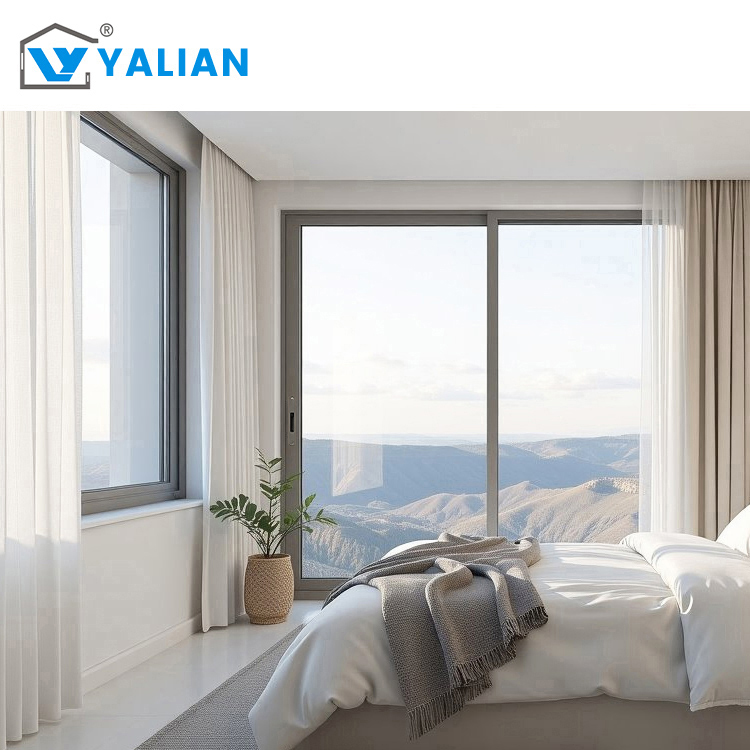
Aluminum sliding door systems are versatile solutions deployed across a wide range of commercial and residential applications. Their space-efficient design, durability, and aesthetic flexibility make them ideal for projects where maximizing natural light and creating seamless indoor-outdoor connections are priorities.
Balconies, patios, garden access points, and interior room dividers benefit from the clean lines and smooth operation of modern sliding doors. Multi-panel stacking systems create expansive openings for luxury homes and villas.
Reception areas, conference rooms, and lobby entrances use sliding doors to manage foot traffic efficiently while maintaining a professional, contemporary appearance. Acoustic-rated variants provide sound privacy without sacrificing openness.
Hotels, resorts, and restaurants deploy sliding doors for terrace access, pool enclosures, and flexible dining spaces. Durable finishes withstand high-traffic usage while contributing to the property's design narrative.
Storefronts and exhibition spaces leverage large-format sliding doors to invite customers inside with unobstructed views. Security-integrated options provide protection after hours without compromising daytime aesthetics.
Hospitals and clinics require hygienic, easy-to-clean surfaces and reliable operation. Aluminum sliding doors meet these demands while supporting wayfinding through customizable color schemes and signage integration.
Schools and universities use sliding doors for classrooms, libraries, and multipurpose halls. Their durability handles heavy daily use, while acoustic performance supports focused learning environments.
Premium sliding door systems typically use 6063-T5 or 6063-T6 aluminum alloys, which offer an optimal balance of strength, formability, and corrosion resistance. These alloys are widely recognized in international building standards and can be further enhanced through anodizing, powder coating, or electrophoretic finishing to meet specific environmental demands.
Container loading depends on door dimensions, packaging type, and whether components are shipped assembled or knock-down (KD). Standard 40HQ containers typically hold 300–500 square meters of sliding doors when KD-packed. Our team provides detailed loading plans during quoting to maximize container utilization and minimize per-unit shipping costs.
We offer multiple surface treatment options including anodizing (various thicknesses), electrophoretic coating (E-coating), color powder spraying, simulated wood grain printing, and thermal break glue injection. Each method provides distinct aesthetic and performance characteristics, allowing you to select the finish that best matches your project's design and durability requirements.
Yes. Our thermal break sliding door systems incorporate polyamide bars and glue injection technology to significantly reduce thermal transmittance (U-values). These systems can meet or exceed requirements set by standards such as AS/NZS 2047, EN 14351-1, and local building codes in cold and hot climates alike.
Standard lead times range from 25 to 35 days depending on order volume, surface treatment complexity, and customization level. Our 100,000-square-meter facility with multiple parallel production lines enables us to scale output rapidly while maintaining quality consistency. Rush orders may be accommodated upon request subject to capacity availability.
We maintain a structured claim resolution process. Upon notification of any quality issue, our team initiates an investigation within 48 hours. Valid claims are addressed through replacement parts, credit notes, or next-order compensation, depending on the nature and severity of the issue. Our goal is to resolve discrepancies efficiently while preserving long-term partnership trust.
About Us
Related Products List
Contact Us

Privacy statement: Your privacy is very important to Us. Our company promises not to disclose your personal information to any external company with out your explicit permission.
Fill in more information so that we can get in touch with you faster
Privacy statement: Your privacy is very important to Us. Our company promises not to disclose your personal information to any external company with out your explicit permission.